
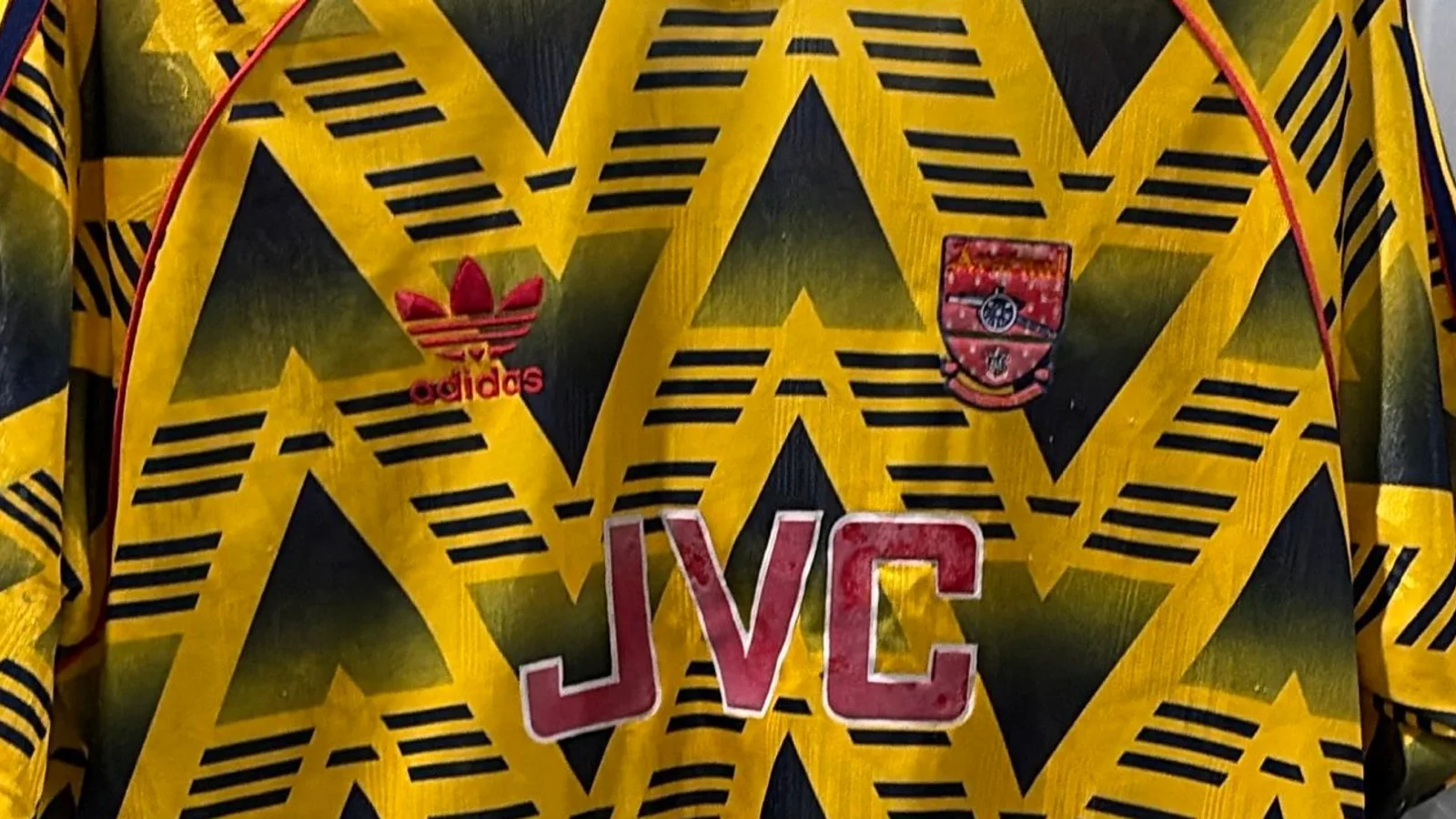
Arsenal’s yellow away shirt from 1991 to 1993, the bruised banana, has been copied many times and officially brought back more than once. So the first question isn’t only real or fake. It’s which shirt you’re looking at. Here is how to tell, with photos of an original.
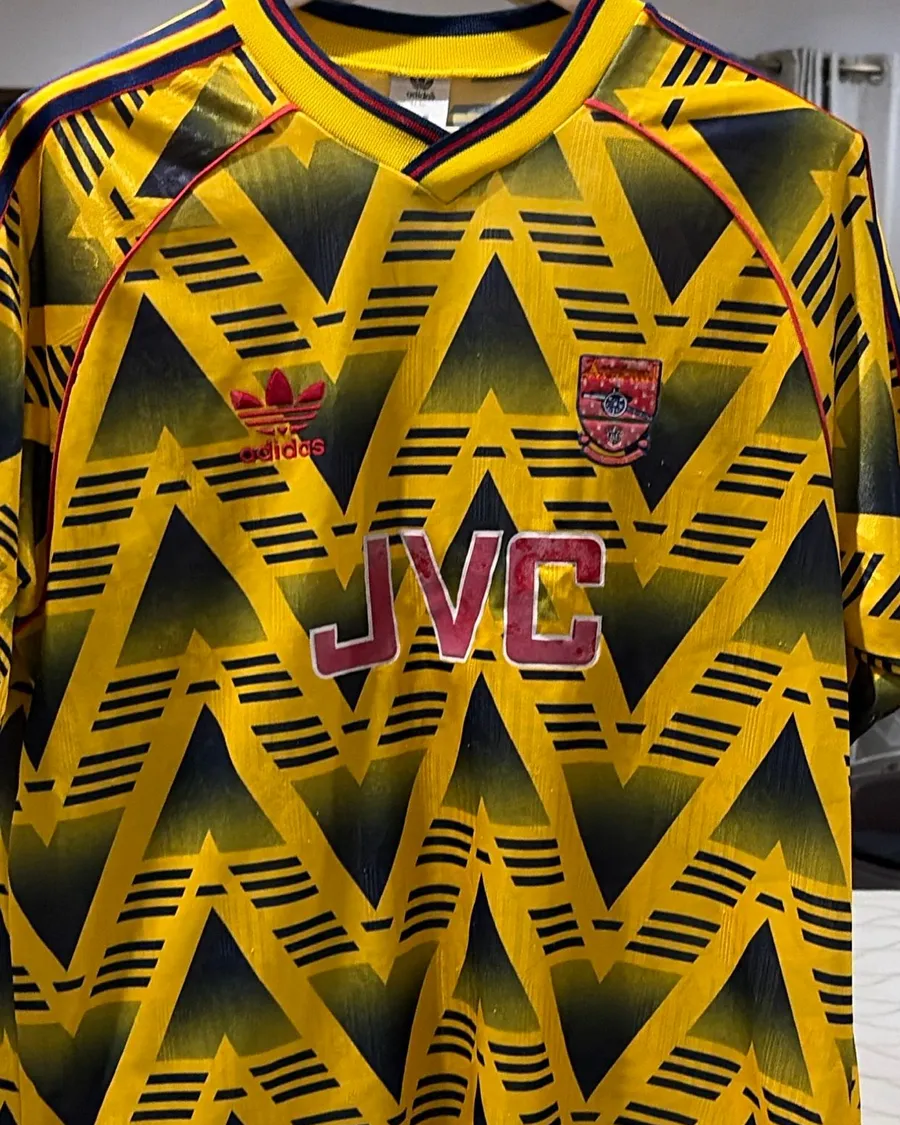
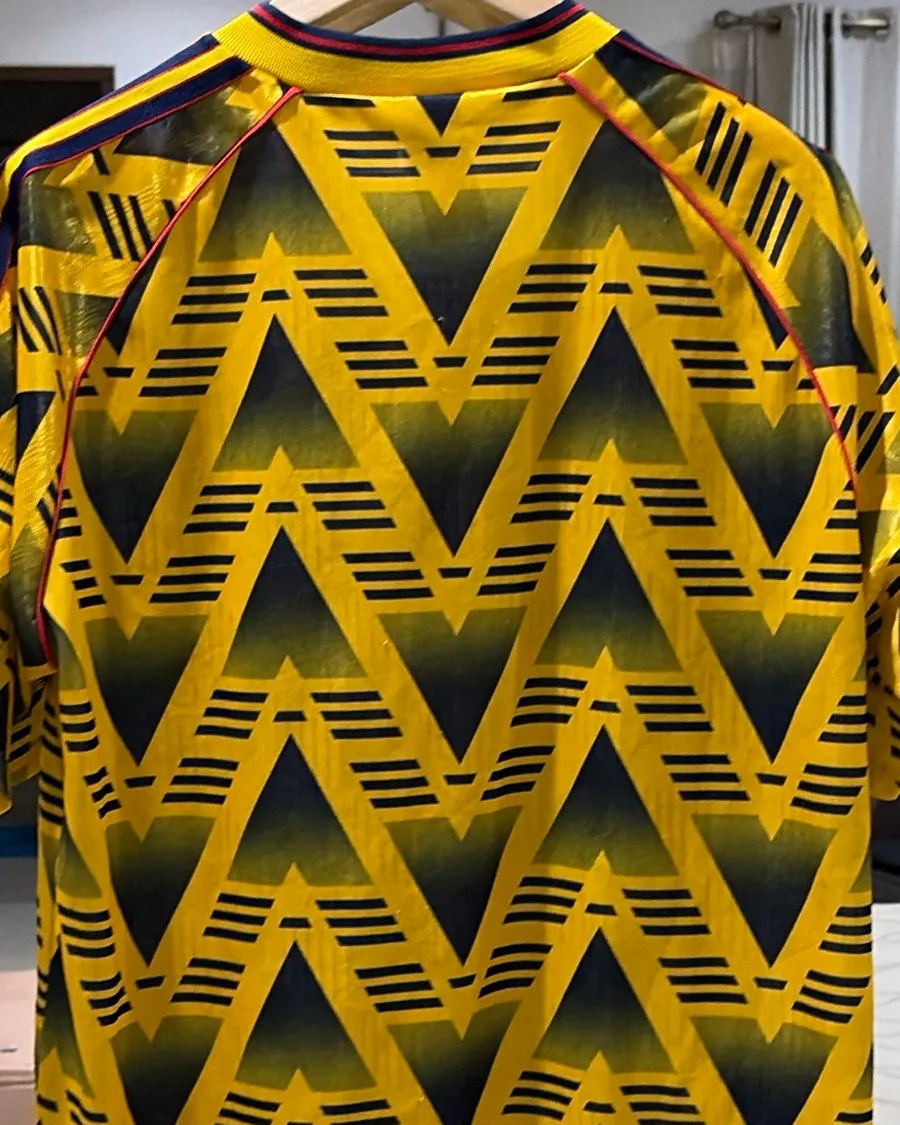
The shirt in these photos was checked on KitLegit and came back authentic.
How to check a bruised banana, step by step
- Ask which one it is. An original, a modern Adidas version, an official remake or a copy?
- Look at the logo. It separates the 1990s shirt from most of the modern ones.
- Compare the pattern. Front and back, against photos of an original.
- Look for age. A shirt from the early 1990s has usually lived a little.
- Check it with an expert. Vintage shirts are where a second pair of eyes helps most.
Original, official comeback or fake?
| The shirt | Made | What to know |
|---|---|---|
| The original | For 1991 to 1993 | Adidas, with JVC across the front |
| The 2019/20 away shirt | 2019 | Adidas, a modern take with a lighter zig-zag and a navy crew neck |
| The 2026/27 away shirt | 2026 | Adidas, reimagining the 1991 shirt |
| An unofficial copy | Any time | Often sold as “retro” |
The modern versions are genuine Adidas shirts. They become a problem when a seller passes one off as the original. See original, reissue, replica or fake.
Six details to compare
These are from an original shirt, checked by an expert. Compare the one you’re looking at with each of them.
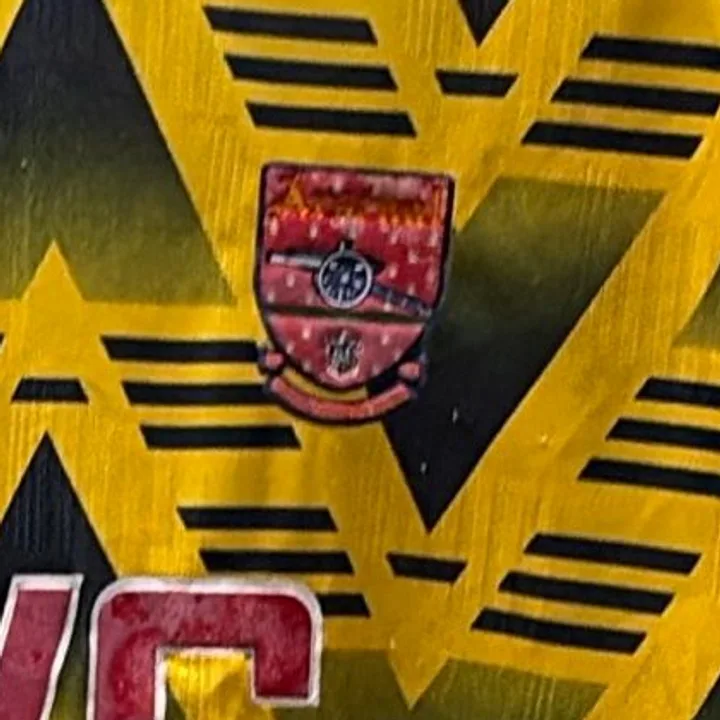
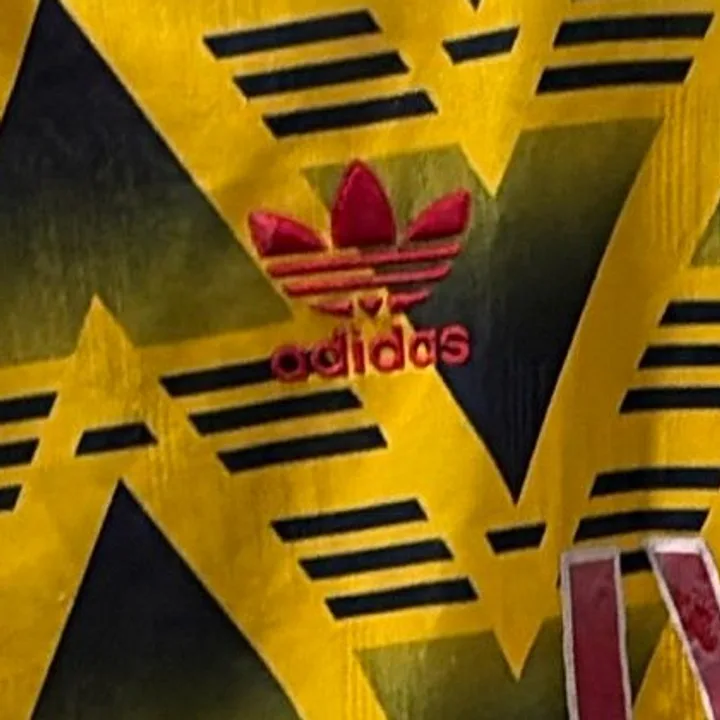
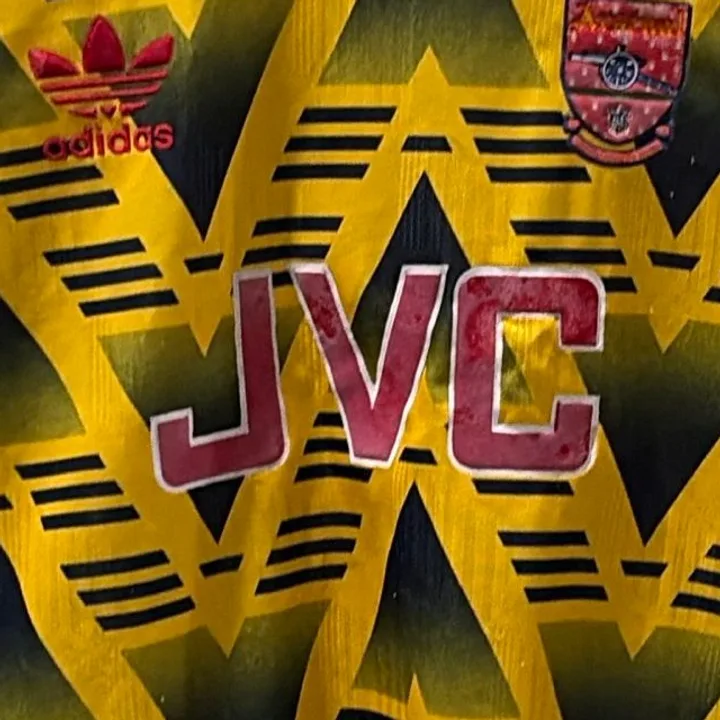
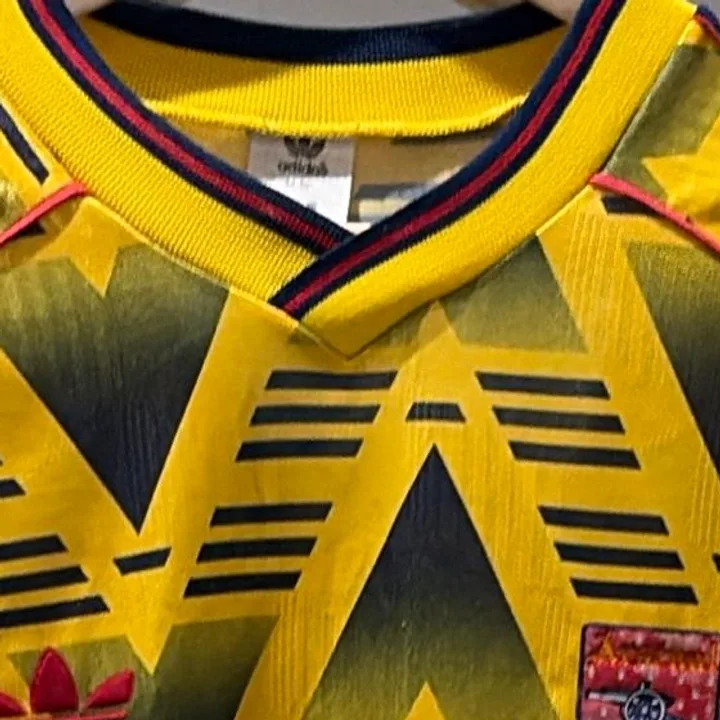
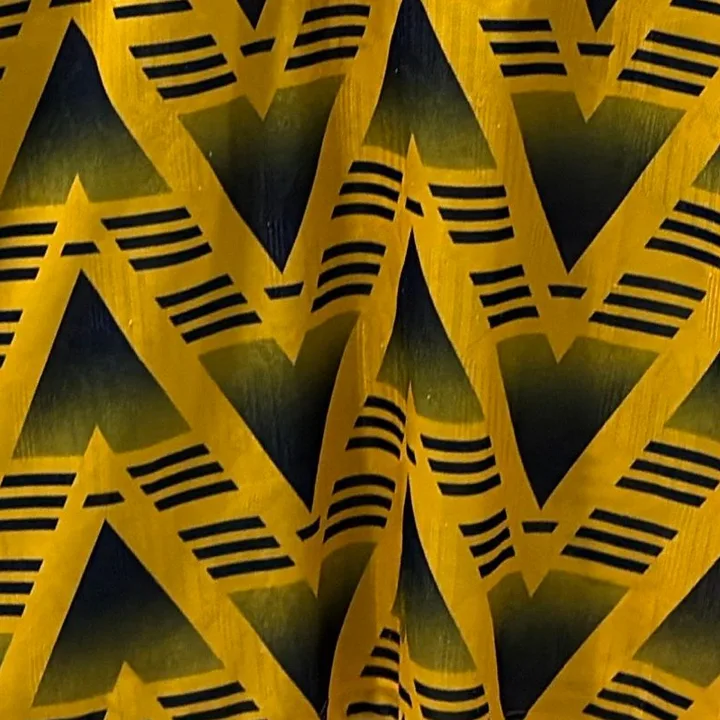
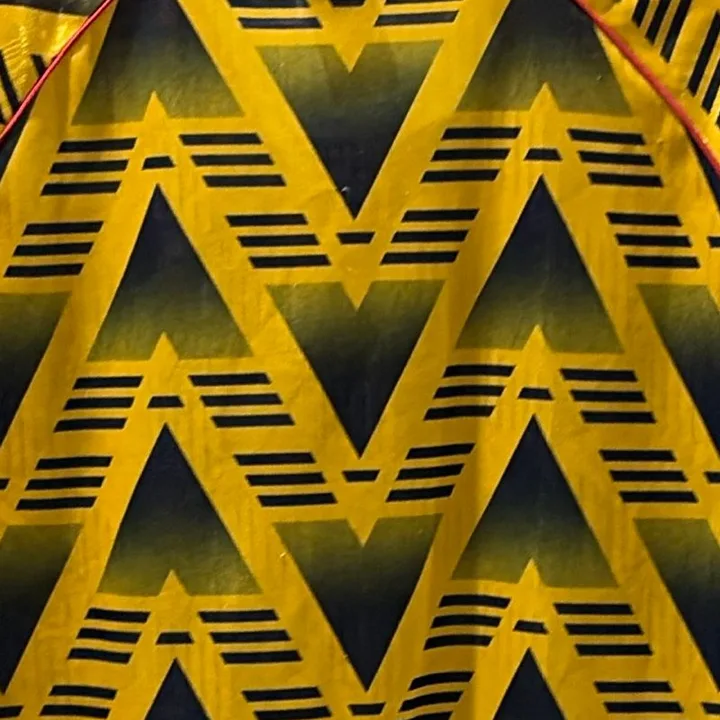
Judge them together. A copy can get the pattern right and the collar wrong.
Signs to look at twice
None of these proves a fake. Each one is a reason to slow down.
- A modern fit and fabric. Shirts of the time were cut wider than today’s
- A modern Adidas logo. The original has the trefoil
- A blurred crest. It’s small, so copies often lose the detail
- A pattern that’s too clean. Hard edges where there should be a fade
- Brand new, in any size. Old stock does turn up, but not usually in every size
- “Retro” in the title. Ask what the seller means by it
What about the labels?
Photograph all of them. On an original they’ve often faded, frayed or been cut out. A missing label leaves you with less to go on, but it isn’t proof of a fake, and a tidy one isn’t proof of an original.
Don’t expect a code you can look up. Many shirts from this time don’t carry one, and where there is a code, it names the design and not your shirt. See how to date a vintage football shirt and what a product code can prove.
Why collectors want it
Adidas introduced it in the summer of 1991, and Arsenal kept it for the first Premier League season in 1992/93. Ian Wright and Paul Merson wore it. For years it turned up on lists of the worst kits ever made. Then the fashion came round, and it became one of the most wanted Arsenal shirts of all.
Arsenal and Adidas have both gone back to it since, which tells you how much it means. It also means there are more versions to tell apart than for almost any other Arsenal shirt. See how often Arsenal shirts come back fake.
Names, numbers and match-worn claims
Some shirts have a number on the back, and some have none. Printing can be added at any time, so look at it separately from the shirt. It can also have been replaced: ask the seller if anything has been repaired or reprinted.
A match-worn shirt from the early 1990s is a serious claim. Ask for evidence about that exact shirt, such as where it came from and who has owned it. A matching design isn’t evidence.
What changes the value
- Original or not: the biggest difference by far
- Condition: a clean sponsor, bright yellow and no holes
- Repairs: a replaced sponsor or badge can cost a lot
- Size: adult sizes people can wear are easier to sell
See what your shirt could be worth.
Buying or selling one
If you’re buying, get the seller to say which version it is, in writing, and ask when and where they got it. Pay through the marketplace and keep the messages. If the price looks too low for an original, it may be a remake, so check the labels before you blame the seller.
If you’re selling, be exact. “Original 1991–93” and “2019/20 remake” are both honest titles. “Retro bruised banana” isn’t clear enough. A certificate answers the first question every buyer will ask.
Photos to ask a seller for
- Front and back, laid flat in good light
- The Adidas logo, the crest and the JVC sponsor, close up
- The neck, from the front and inside
- Every label, even a faded one
- Any holes, marks, repairs or replaced printing
A refusal isn’t proof of a fake, but you’d be buying without knowing. Read how to buy second-hand before you pay.