
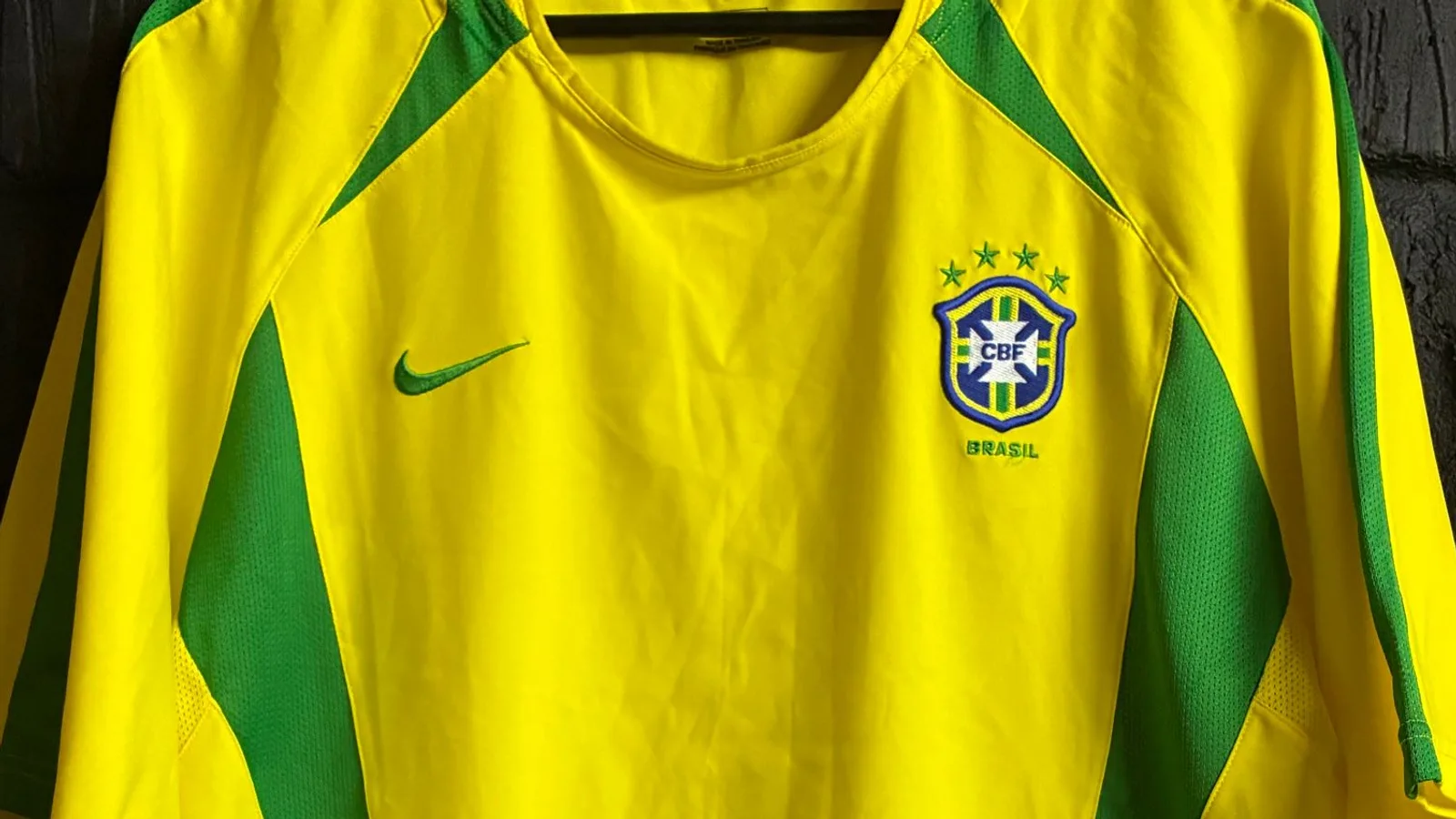
Brazil won all seven matches and their fifth World Cup in this Nike shirt. The stars above the crest are the detail most people get wrong. Here is how to tell an original Brazil 2002 jersey from a remake or a fake, with photos of a genuine one.
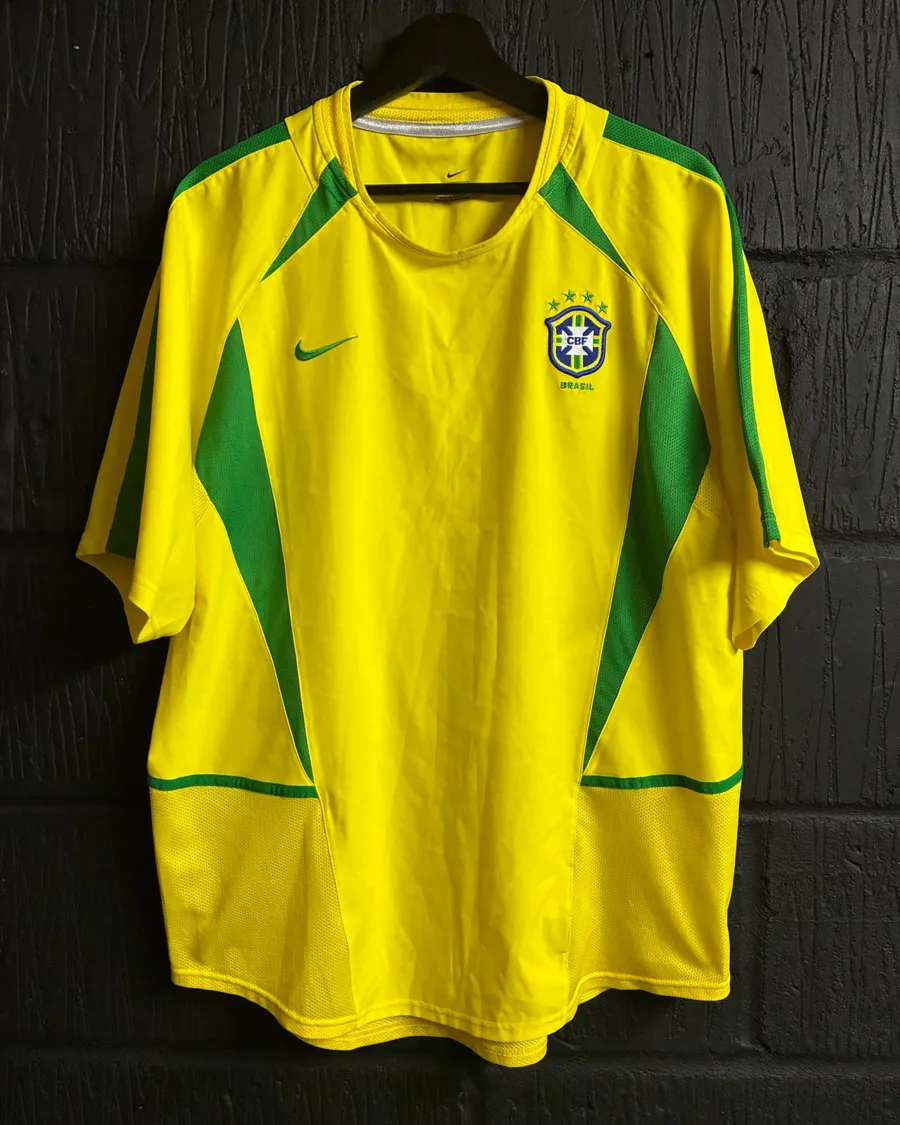
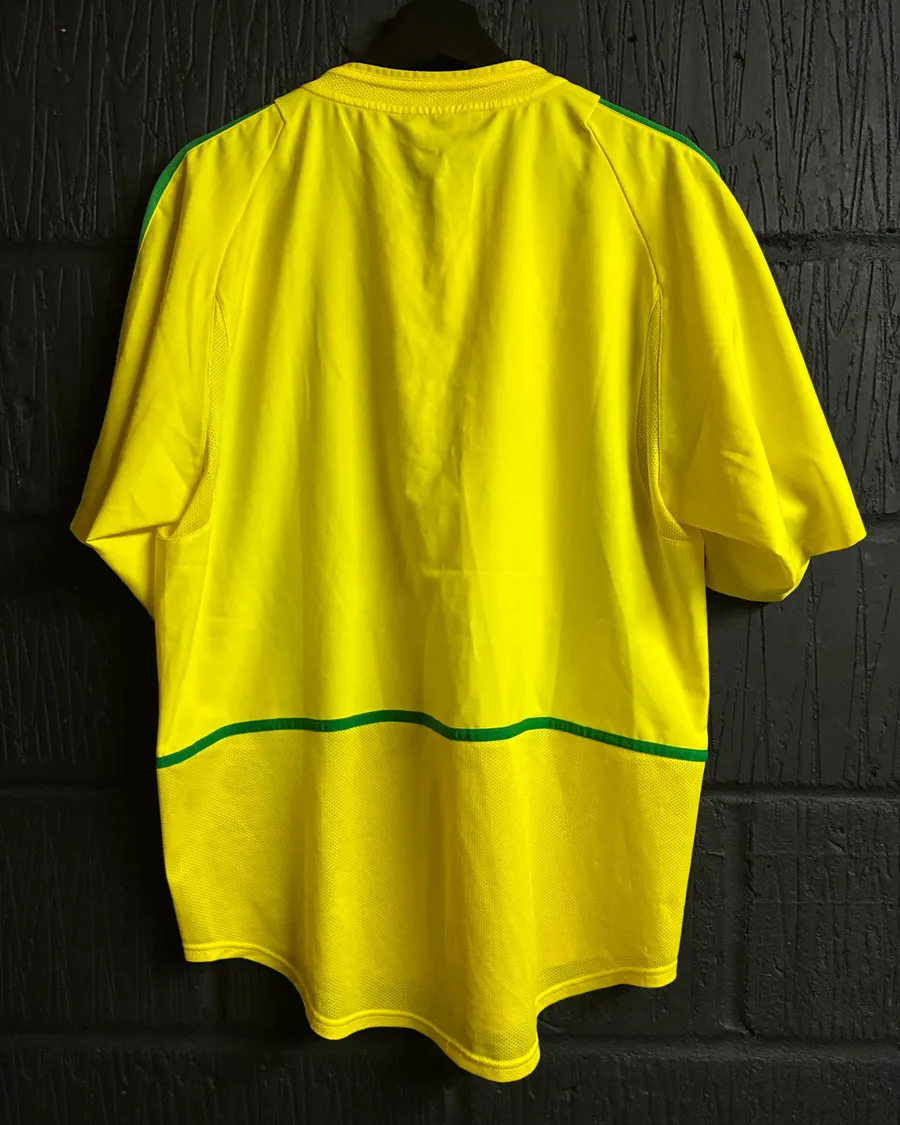
The shirt in these photos was checked on KitLegit and came back authentic.
How to check a Brazil 2002 shirt, step by step
- Read the claim. Is it sold as an original from 2002, a later product, a player version or a worn shirt?
- Count the stars. Four or five tells you which shirt it should be.
- Compare the details. Use the six close-ups below, front and back.
- Read the labels. They should agree with each other and with the listing.
- Judge the printing on its own. A name on the back says nothing about the shirt.
- Check it before you pay. If you can get the photos, you can check the shirt.
Four stars or five?
Brazil went to Korea and Japan as four-time champions, so the shirt made for the tournament has four stars. They earned the fifth by winning the final, which means five stars point to a shirt made afterwards.
Neither makes a shirt real or fake on its own. It tells you which shirt you’re looking at.
| The shirt | Stars | What to know |
|---|---|---|
| Made for the tournament | Four | The one most collectors want |
| Made after the final | Five | Can be genuine, but it isn’t the tournament shirt |
| Official remake | Either | Genuine, but not from 2002 |
| Counterfeit | Either | Copies what it sees in photos |
Six details to compare
Hold each one against a photo of a genuine shirt with the same number of stars.
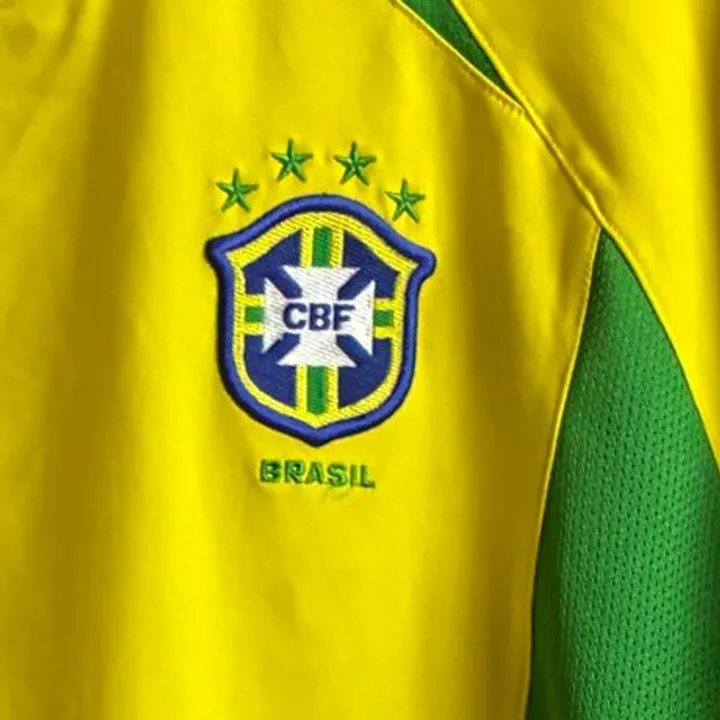
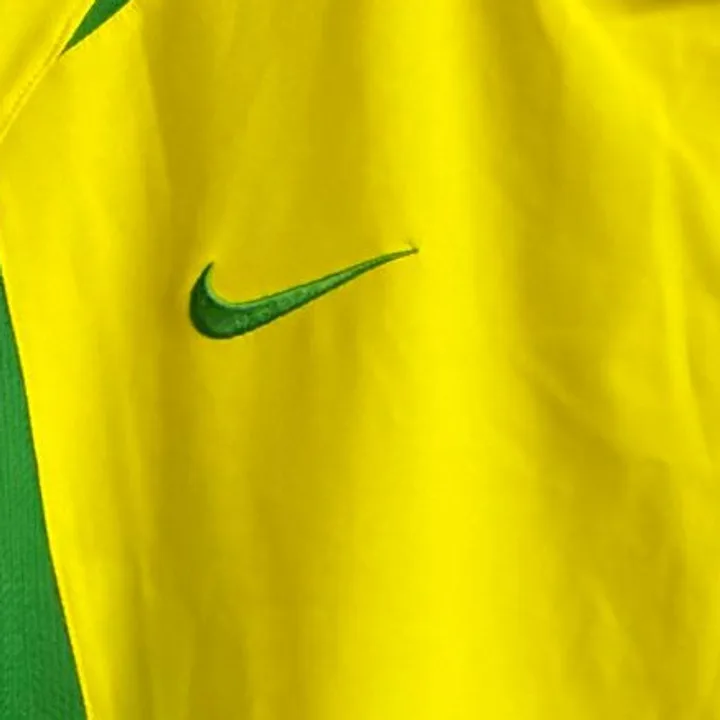
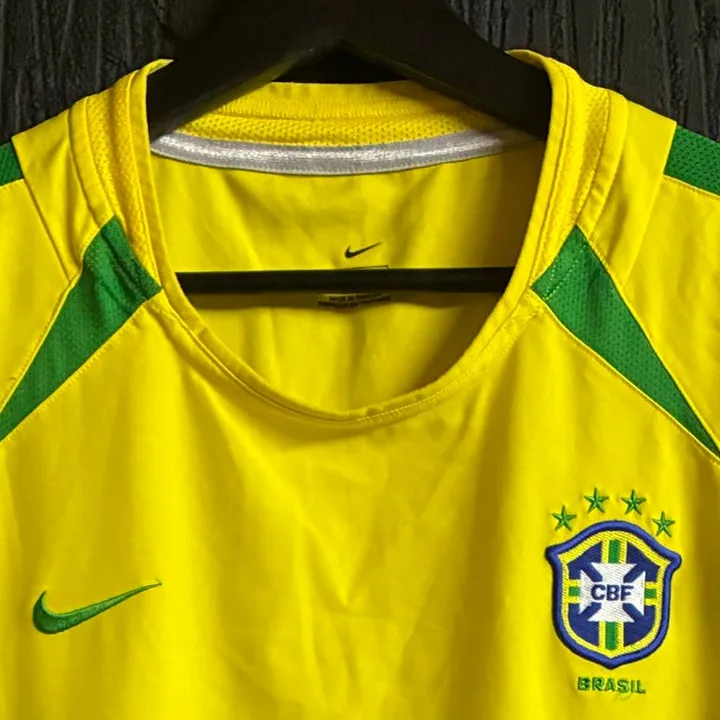
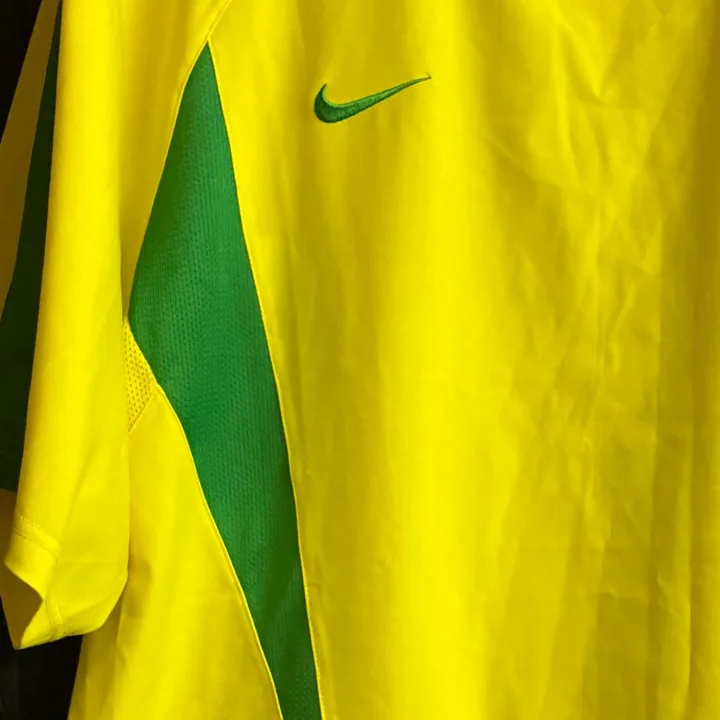
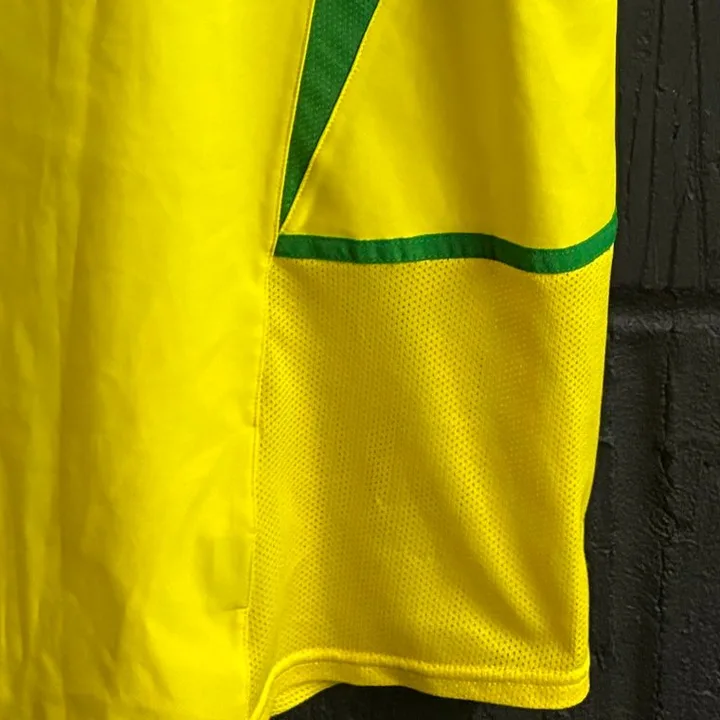
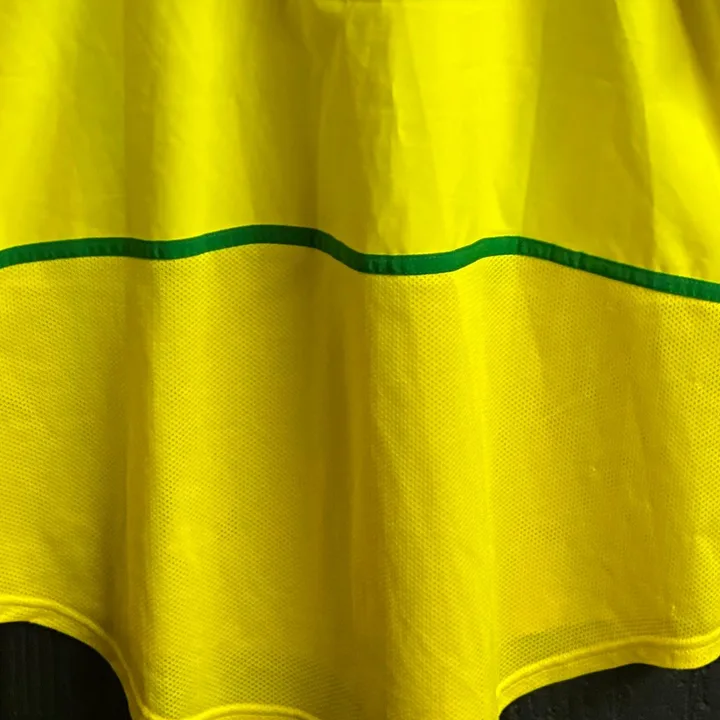
No one detail settles it. A good fake can get some of these right, and a genuine shirt can be worn, faded or repaired.
Signs to look at twice
None of these proves a fake. Each one is a reason to ask for more photos.
- The stars don’t match the story. A five-star shirt described as the one worn at the tournament
- The green is uneven. One panel longer, wider or lower than the other
- The crest looks flat or blurred. Letters that run together, or stars of different sizes
- The same fabric everywhere. On the shirt in our photos, the mesh under the green line is easy to see
- Only front and back photos. No labels, no close-ups, or pictures borrowed from another listing
- Every size in stock. An old design, brand new, with any name you like on the back
What about the labels and the code?
Look at the labels together. The size, the brand and the care details should make sense for the shirt, and the printing on them should be easy to read unless it has worn away. Labels on a shirt of this age are often faded, and some owners cut them out. A missing label leaves you with less to go on, but it isn’t proof of a fake.
If there’s a product code, search it and compare what comes up. Then keep going. A code names the design and not your shirt, and counterfeiters copy real ones. See what a product code can prove and how to date a vintage football shirt.
Why collectors want it
This is the shirt of Ronaldo’s comeback. After two serious injuries, the striker scored both goals in the final against Germany in Yokohama. Ronaldinho, Rivaldo, Cafu and Roberto Carlos wore it too.
It’s also the shirt that gave Brazil a fifth star, and that’s why it’s copied so often. Listings call it the Brazil 2002 jersey, the Ronaldo 2002 shirt or the 2002–04 home kit. They can all mean the same design, so go by the photos and not the title.
The story adds to what people will pay, which makes it worth slowing down. A shirt that looks right in one photo from across a room is the easiest kind to fake.
Fan version, player version or remake?
- Fan version: the one sold in shops, and the one most people own
- Player version: made for the squad. Its fabric and fit can differ, so compare it with another player version
- Remake: made later. Ask when and where the shirt was bought, and see original, reissue, replica or fake
Home, away and long sleeves
This guide covers the yellow home shirt with short sleeves. Brazil’s blue away shirt, and long-sleeved versions, have details of their own. Compare each one with photos of the same shirt.
Is my Brazil 2002 shirt an original or a retro?
“Retro” is a style, not a date. It can describe an old shirt, an official remake or an unofficial copy, so ask the seller to say which one they mean. An original was made around the time the team wore it. A remake came later, under licence. An unofficial copy had no licence at all, however good it looks.
Be careful with “brand new” shirts in every size. An old design with lots of stock is more likely to be a later product than a find.
Names, numbers and match-worn claims
Ronaldo 9 is the name everyone wants, and the easiest to add. Judge the printing separately from the shirt. For a match-worn claim, ask for evidence about that exact shirt. A five-star shirt can’t have been worn in the final.
What changes the value
A genuine Brazil 2002 shirt can be worth very different amounts. What moves it:
- Stars: collectors look for the four-star tournament shirt first
- Condition: bright yellow and clean printing beat faded and cracked
- Version: fan or player
- Name and number: the right printing helps, and the wrong one can cost you
- Size: adult sizes people can wear sell more easily
See what your shirt could be worth.
Before you buy one online
- Compare like with like. A price only means something next to the same version, size and condition
- Read the seller’s history. What else have they sold, and what did buyers say?
- Ask where it came from. A clear answer helps, though it isn’t proof
- Pay through the marketplace. Read its buyer protection rules first. It can help you get your money back, but it doesn’t tell you the shirt is real
- Keep everything. The listing, the messages and the photos
We have guides for buying on Vinted, on eBay and on other marketplaces.
Selling a Brazil 2002 shirt?
Say how many stars it has, show the labels and be clear about the printing. Check the shirt first and share the certificate, so a buyer can see the result for themselves.
Photos to ask a seller for
- Front and back, laid flat in good light
- The crest and every star, close up
- The green panels, the neck and the green line, close up
- The labels inside, close enough to read
- Any name, number, mark or repair
A refusal isn’t proof of a fake, but you’d be buying without knowing. See how to buy second-hand, or look at how often Brazil shirts come back fake.