
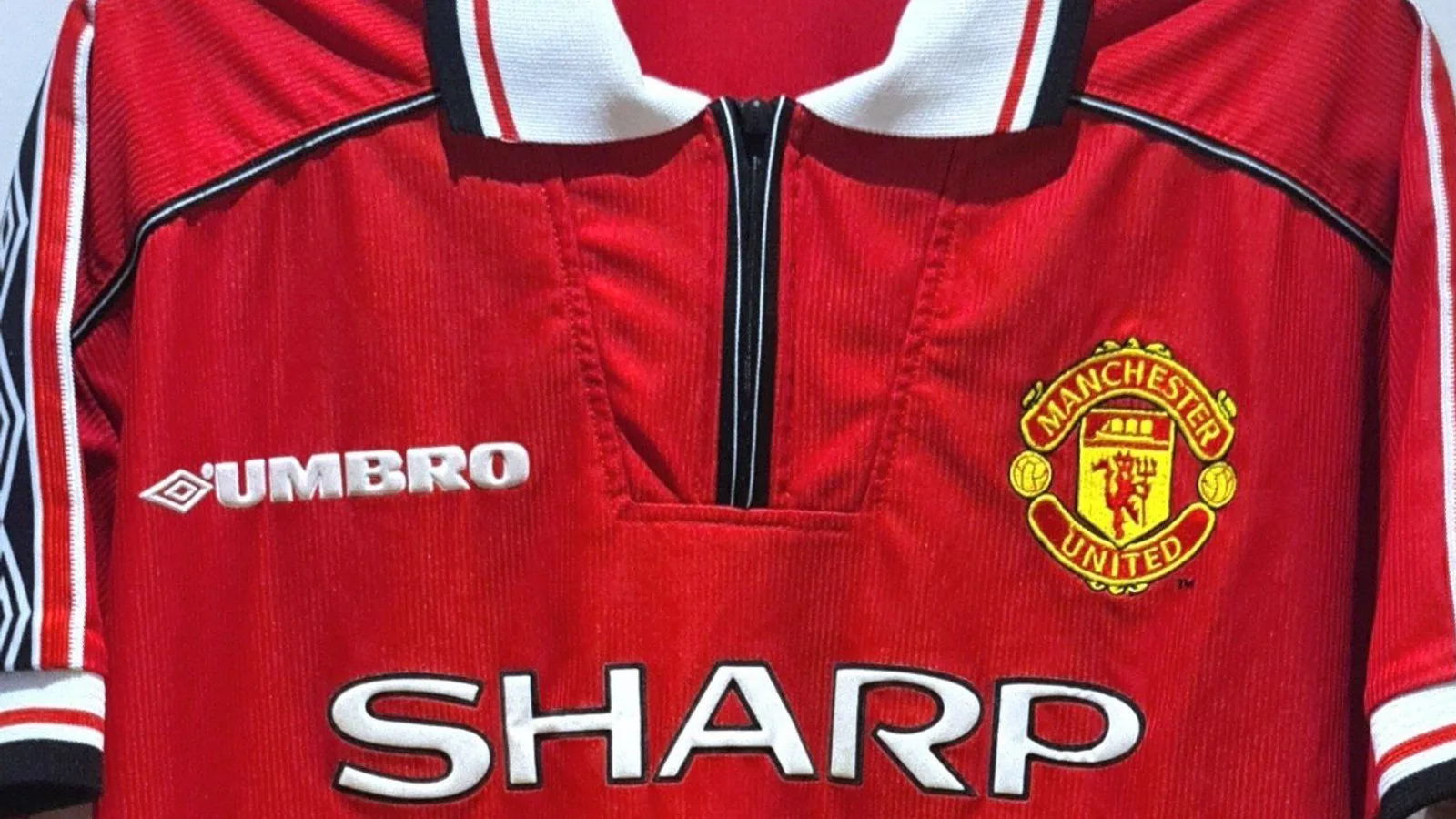
This is the Umbro home shirt of the 1998/99 treble. Sellers use one name for several different shirts, so before you ask if it’s real, find out which one it is. Here is how to check an original Manchester United 1998–2000 shirt, with photos of a genuine one.
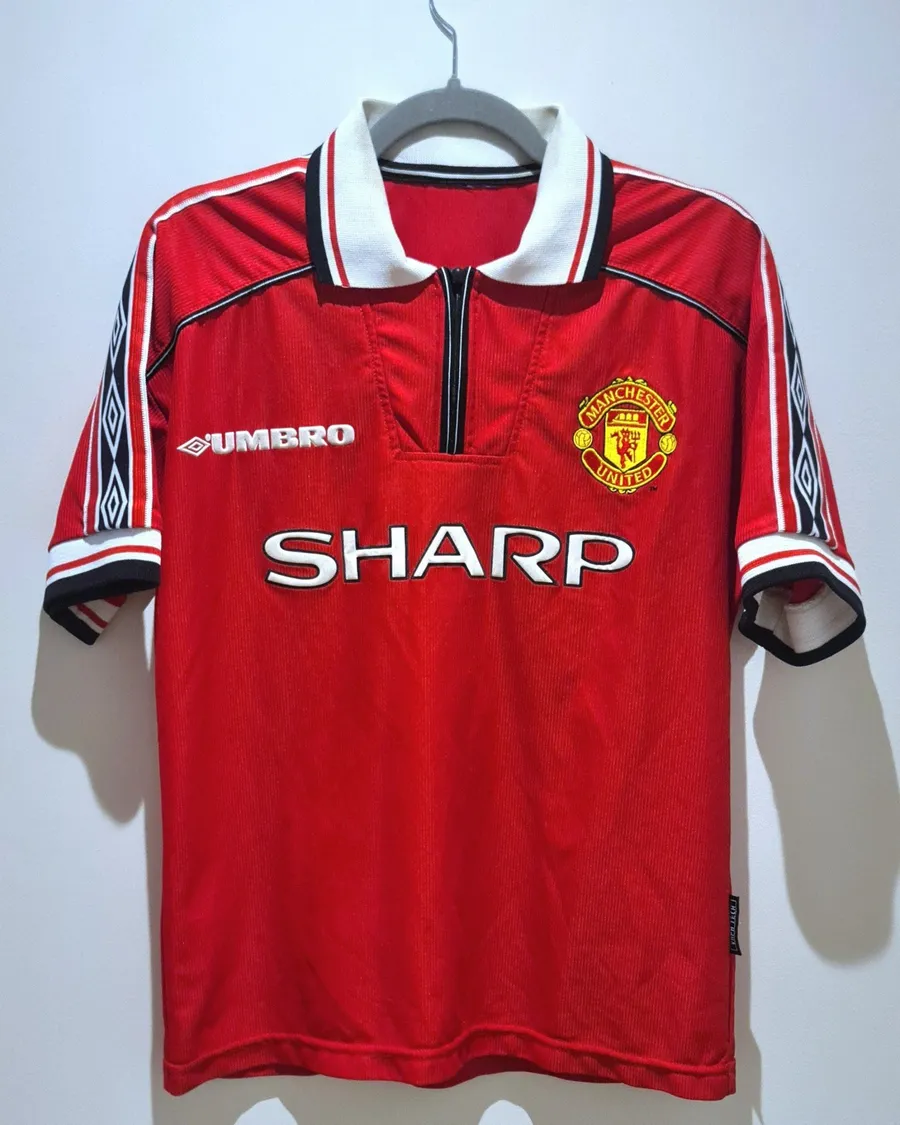
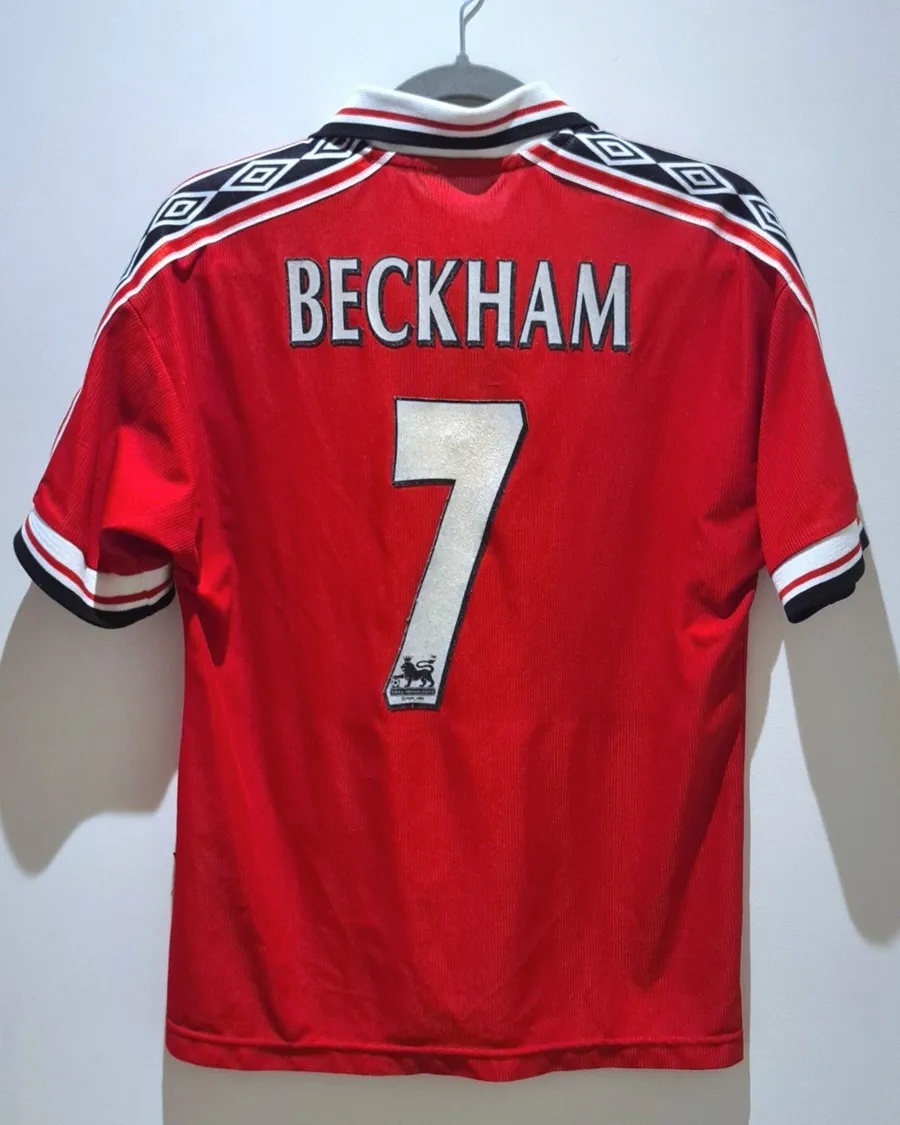
The shirt in these photos was checked on KitLegit and came back authentic.
How to check a treble shirt, step by step
- Name the shirt. Home, European or reissue?
- Start with the collar. It separates the home shirt from the others.
- Follow the diamonds. Down the sleeves and over the shoulders.
- Look closely at Sharp and the crest. Copies often slip up there.
- Get an expert to look. Shirts from the 1990s have little to look up.
Which shirt is it?
| The shirt | How to recognise it |
|---|---|
| Home, 1998 to 2000 | White collar with a zip, Sharp across the front |
| European, 1998/99 | A separate shirt for the Champions League, with a different collar |
| Official reissue | A retro version the club sells today |
| Unofficial copy | Often called “retro”, in every size |
Compare a European shirt with photos from those matches, not with the league shirt. And be fair to the reissue: it’s an official product, as long as nobody calls it an original. See original, reissue, replica or fake.
Six details to compare
These close-ups are from a home shirt checked by an expert.
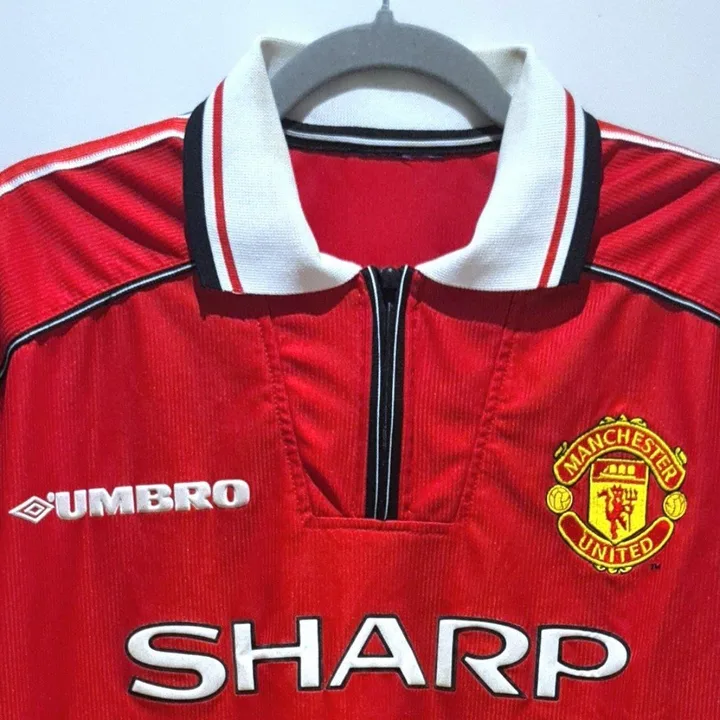
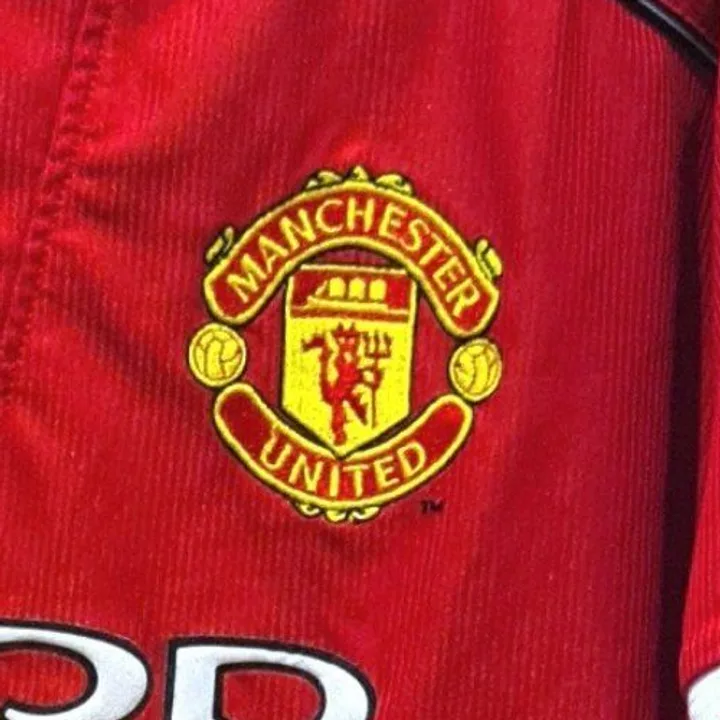
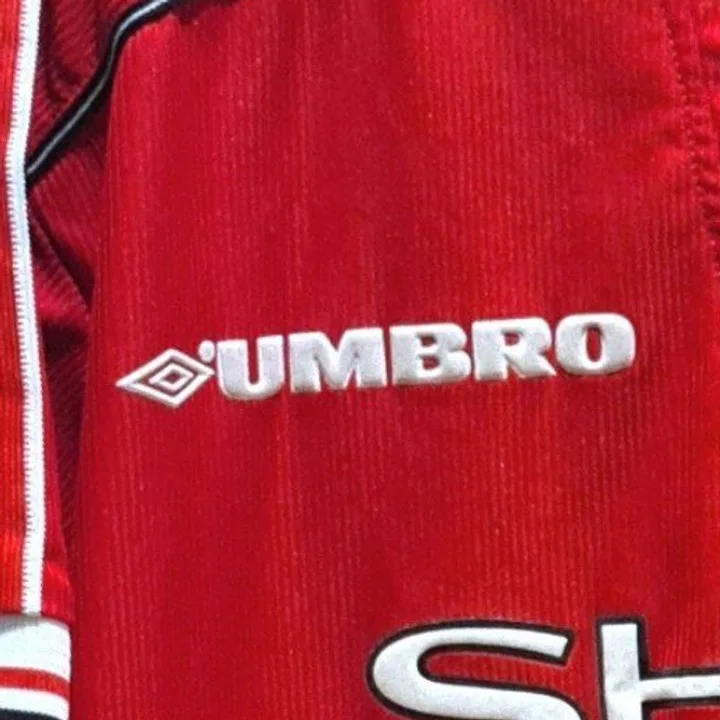
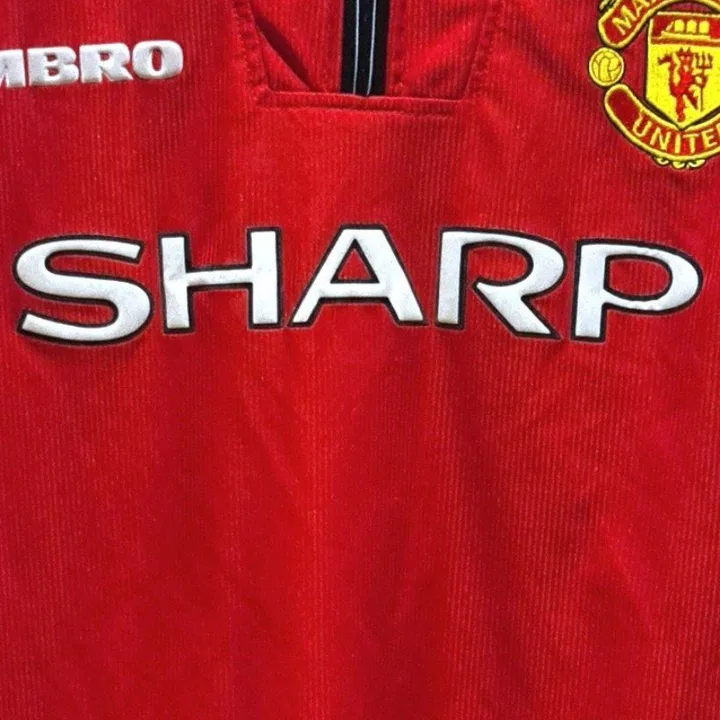
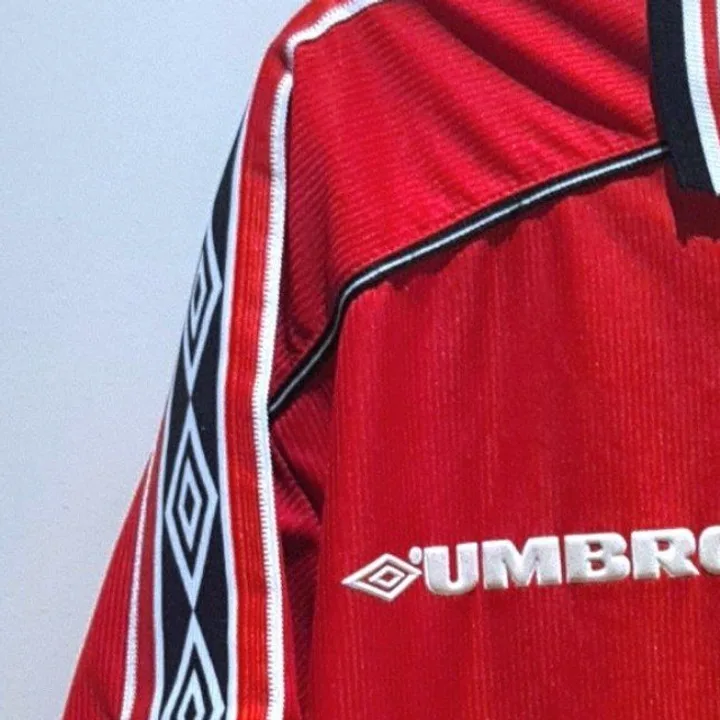
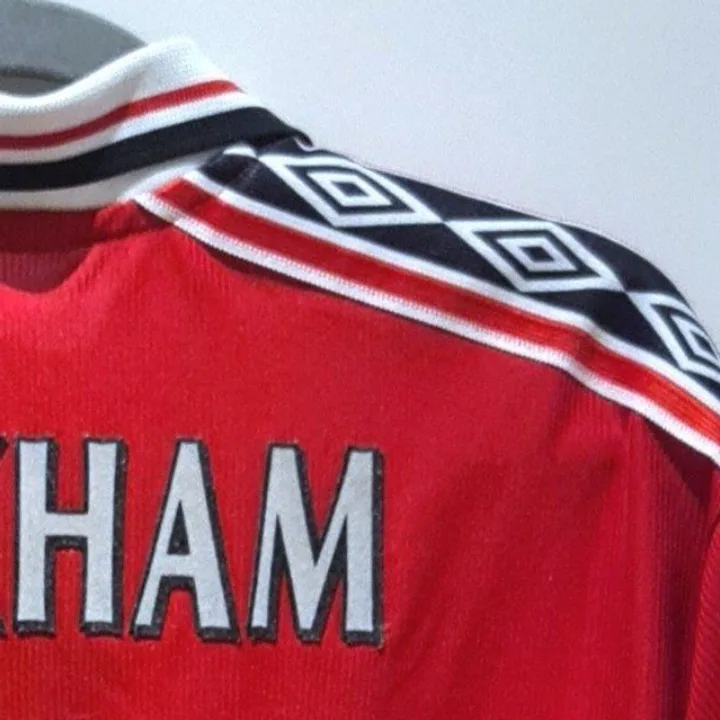
Look at all of them together. The big shapes are easy to copy. The edges of Sharp and the inside of the crest are harder.
Signs to look at twice
None of these proves a fake. Each one is a reason to ask.
- A zip that bends or stops too high
- Diamonds that don’t match from one sleeve to the other
- Sharp without its dark edge, or with one that wobbles
- A crest you can’t read up close
- A modern label in a shirt sold as 1998
- A 1999 final story with no evidence behind it
What about the labels?
Photograph them all, even the faded ones. Umbro’s labels from the time look nothing like a modern shirt’s, so compare them with another 1990s Umbro shirt. Wear is normal, and some owners cut labels out. Neither is proof of anything.
There may be no code to search, and you don’t need one. Where there is one, it names the design and not your shirt. See how to date a vintage football shirt and what a product code can prove.
Why collectors want it
In 1998/99 United won the Premier League, the FA Cup and the Champions League in eleven days. The final in Barcelona turned on two goals in stoppage time, from Teddy Sheringham and Ole Gunnar Solskjær.
The team kept the home shirt for 1999/2000 and won the league again. So the same design covers two title-winning seasons. Beckham, Keane, Giggs, Scholes and Yorke are the names you’ll see. See how often United shirts come back fake on KitLegit.
Original or reissue?
Both can look good in a photo. To tell them apart:
- Labels: a modern label means a modern shirt
- Fabric and fit: compare them with a known original, not from memory
- Sponsor: original printing has usually aged
- The story: ask when and where it was bought
A shirt that looks untouched isn’t automatically a reissue. Some were kept in a drawer for 25 years. It just needs a better explanation.
Names, numbers and match-worn claims
The shirt in our photos has Beckham 7 on it. Printing from the time, printing added last year and no printing at all can all be on a genuine shirt. Judge it on its own.
Commemorative embroidery and star badges were added to some shirts after the final. They don’t show that a shirt was there. A match-worn claim needs evidence about that exact shirt.
What changes the value
- Which shirt it is: home, European or reissue
- Name: Beckham 7 and Solskjær 20 are the ones people look for
- Condition: a whole sponsor, a working zip and a white collar
- Printing: original beats replaced
See what your shirt could be worth.
Buying or selling one
Buying? Ask for “1998–2000 home, original” in writing, or whatever the seller says it is. Then check the photos against that. Pay through the marketplace, and read our guides for eBay, Vinted and other marketplaces first.
Selling? Don’t write “1999 final shirt” unless it is one. Show the collar, the labels and the sponsor, and say what’s been replaced. A certificate does the rest.
Photos to ask a seller for
- Front and back, laid flat in good light
- The collar and the zip, open and closed
- Both shoulders and both sleeves
- The crest and the Sharp sponsor, close up
- Every label, however faded
- Any repairs, marks or replaced printing
A refusal isn’t proof of a fake, but you’d be buying without knowing. Read how to buy second-hand.